
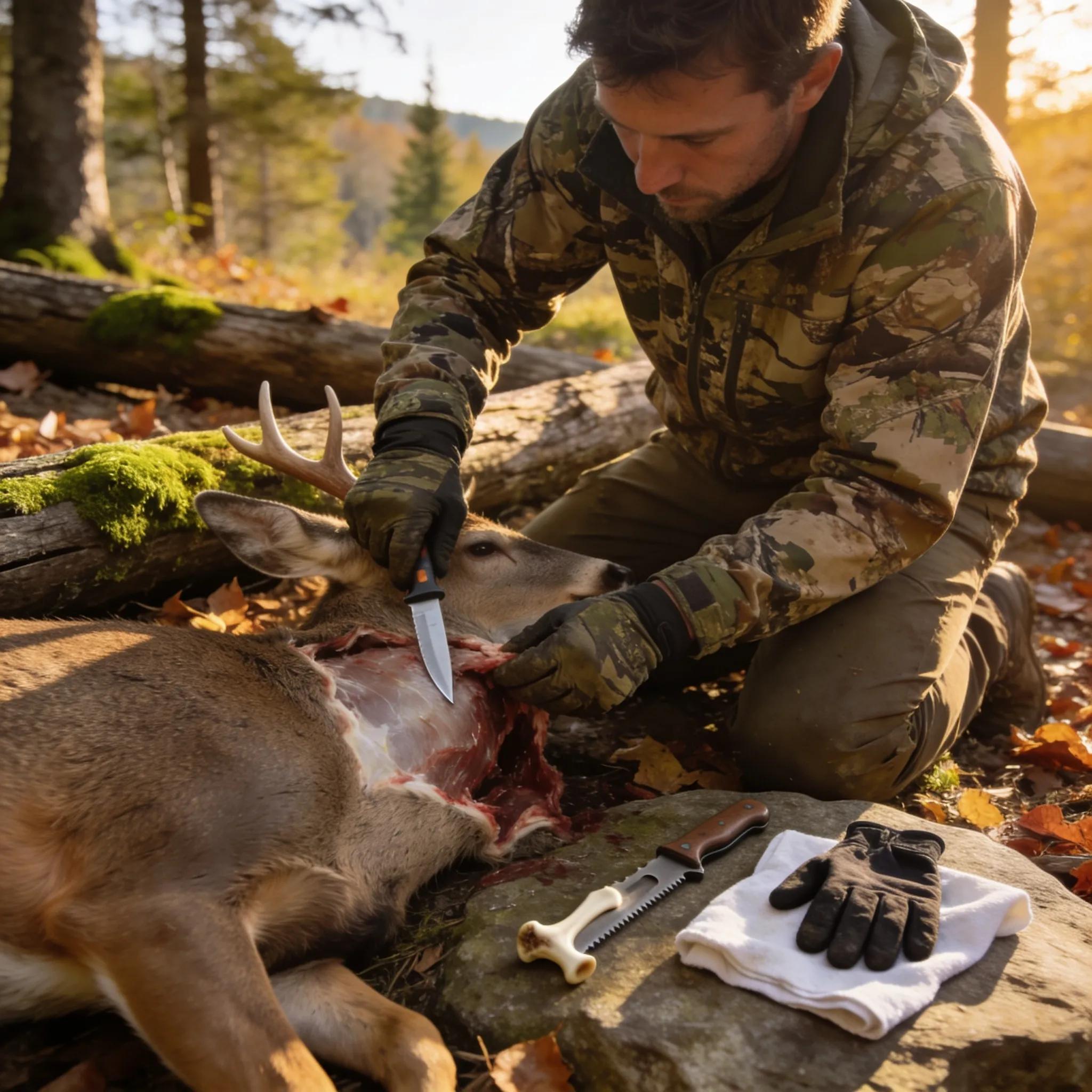
Complete Guide to Field Dressing and Game Processing Essentials for Hunters
What Are the Step-by-Step Deer Field Dressing Procedures?
How to Prepare Safely for Field Dressing Your Deer
- Field Dressing Knife: A specialized gutting knife that facilitates clean cuts.
- Disposable Gloves: These protect the hunter from contaminants and maintain meat hygiene.
- Rope or Cord: Useful for hanging the deer while processing.
What Is the Proper Sequence for Deer Gutting and Internal Organ Removal?
- Initial Cut: Make a shallow cut to avoid puncturing the stomach or intestines.
- Identifying Organs: Clearly separate the bladder and intestines from the rest of the cavity to prevent contamination.
- Completion: Remove all internal organs, ensuring no residual material remains.
Which Are the Best Knives and Tools for Effective Game Processing?
What Knives Are Recommended for Skinning and Butchering Wild Game?
- Skinning Knife: Curved blade for easy skinning without damaging the meat.
- Butchering Knife: Sturdy and sharp, ideal for cutting through muscle and fat.
- Boning Knife: Fine blade useful for removing bones without significant meat loss.
What Additional Game Processing Tools Should You Have?
- Cutting Board: Provides a safe and clean surface for processing.
- Meat Saw: Essential for cutting through larger bones.
- Game Bags: Useful for storing meat and protecting it from dirt and pests.
How Do You Properly Skin a Deer and Preserve Wild Game Meat?
What Are the Best Skinning Methods for Clean Game Butchering?
- Starting at the Hocks: Begin by making incisions at the hocks and work your way up.
- Use of Pliers: Utilize skinning pliers to aid in pulling the skin off without tearing.
- Cutting the Hide: Be cautious while cutting the hide to prevent contact with the meat.
How Should You Age, Freeze, and Cure Game Meat for Optimal Quality?
- Aging: Hanging meat in a cool, dry place for a few days to enhance flavor.
- Freezing: Wrapping meat tightly in freezer paper to prevent freezer burn.
- Curing: Using salt or other preservatives to maintain flavor and texture over longer periods.
What Are the Essential Safety and Hygiene Protocols During Game Processing?
How Can You Prevent Contamination While Field Dressing and Processing?
- Clean Equipment: Ensure that all knives and tools are sanitized before use.
- Glove Usage: Always wear gloves when handling raw meat to prevent cross-contamination.
- Work in a Clean Environment: Conduct the processing in a clean and controlled area away from dirt or pests.
What Cleaning Procedures and Environment Setup Ensure Safe Wild Game Handling?
- Sanitizing Surfaces: Use bleach or other sanitizers to clean all surfaces before and after processing.
- Proper Waste Disposal: Dispose of internal organs and waste materials far from the processing area to avoid attracting pests.
- Regular Hand Washing: Wash hands frequently, especially after handling raw meat.
When and How Soon Should Game Be Processed After Harvesting?
Why Is Timely Cooling Important for Deer and Other Wild Game?
What Are the Recommended Timeframes for Each Processing Step?
- Initial Cooling: Within 2 hours of harvesting, the deer should be cooled.
- Field Dressing: Ideally completed within 30 minutes to 1 hour after the harvest.
- Butchering and Processing: Should be done within 24 hours of field dressing to maintain optimal quality.
0 Comments